

Rear Entry vs Side Entry: What’s Best For You?
Choosing the right wheelchair accessible vehicle (WAV) is a huge decision that depends on your specific needs and lifestyle. When you are choosing a wheelchair accessible vehicle, one question you may ask yourself is whether rear entry or side entry would be best for you. Both have their advantages and limitations, so it’s important to consider all the factors before making your decision.
Ease of Entry and Exit
Rear Entry:
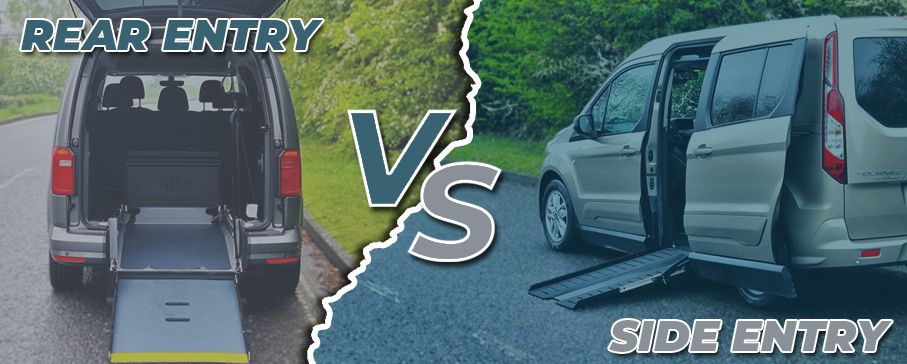
Rear-entry WAVs allow the wheelchair user to enter and exit through the back of the vehicle. The ramp extends from the rear, providing a straightforward drive-up to enter. Rear entry vehicles are generally easier to park as you do not need space on the sides for the ramp to deploy, meaning most normal parking spaces should suffice. This also makes street loading easier as the wheelchair user isn’t entering and exiting into traffic.
Side Entry:
Side-entry WAVs provide access through a ramp or lift on the side of the vehicle. This entry method can require some manoeuvring to get into position but often allows the wheelchair user to simply roll forward to exit, instead or reversing out of a rear entry vehicle, which can be easier for some.
Passenger Capacity and Seating
Rear Entry:
Rear-entry WAVs maintain a more traditional seating layout, often allowing for multiple passengers along with the wheelchair user. You also normally get more interior space which is great for users who require extra space for larger power wheelchairs and scooters.
Side Entry:
Side-entry WAVs offer greater flexibility in seating arrangements. These vehicles can often allow for the wheelchair user to sit in the front passenger seat or even drive the vehicle, depending on the conversion.
Cost and Conversion
Rear Entry:
Rear-entry conversions are normally more cost-effective compared to side-entry conversions. This can make them a popular choice for those on a tighter budget.
Side Entry:
Side-entry conversions tend to come at a higher cost due to the additional modifications required. However, they can provide better visibility for the wheelchair user, who can sit closer to the front of the vehicle, improving the overall travel experience.
Factors to Consider
When deciding between a rear entry and side entry WAV, make sure you also consider the following factors:
Budget: Choose the option that fits within your budget.
Seating Requirements: Determine how many passengers you need to accommodate regularly and choose accordingly.
Wheelchair User’s Preference: Consider the comfort and preferences of the wheelchair user regarding their seating position and interaction with other passengers.
Parking Considerations: Evaluate your typical parking situations to determine which conversion suits your needs better.
Accessibility Needs: Ensure the conversion meets the specific accessibility requirements of the wheelchair user.
Choosing between a rear entry and side entry WAV is a significant decision that should be based on your unique needs and preferences. Rear entry vehicles offer cost-effectiveness, ample interior space, and flexibility when parking, making them a great choice for many users.
On the other hand, side entry vehicles provide enhanced accessibility, better visibility, and more seating options, although at a higher cost.
For more information and to explore our range of used WAVs, contact WavMob today. Our specialists are ready to help you find the perfect vehicle.